DataCops vs Triple Whale

First-party capture and verified conversions that improve Triple Whale's attribution models.

Triple Whale models are only as good as the events feeding them. DataCops captures first-party from your subdomain, filters bot sessions, and provides a complete verified conversion stream - your Triple Whale models start reflecting reality.

Start Free
40–60%of conversions lost to ad blockers in legacy tools
< 30 minto go live with DataCops - one script, one CNAME
9–10event match quality on Meta & Google after switch

Attribution is only as good as what you feed it

Most attribution tools are beautiful dashboards built on a broken capture layer. DataCops fixes the foundation - so every model, every insight, and every ROAS number reflects reality.

Pixel Dependency
Triple WhaleBuilt on Meta Pixel + GA4 - inherits their data gaps
DataCopsDedicated first-party capture - no pixel dependency
Triple Whale's attribution models are fed by the same Meta Pixel and GA4 data that ad blockers and ITP degrade. DataCops provides a complete first-party event stream that Triple Whale can ingest via API.
DTC / Shopify Focus
Triple WhaleDTC and Shopify-first - limited B2B and SaaS support
DataCopsWorks across DTC, SaaS, B2B, and lead gen
Triple Whale is deeply integrated with Shopify and optimized for DTC ecommerce. Teams outside that vertical - SaaS, B2B, lead gen - find the platform's features and attribution logic less applicable.
Safari / ITP Attribution
Triple Whalefbclid expires on Safari - mobile purchases go unattributed
DataCopsServer-side click attribution - ITP can't expire it
Triple Whale relies on the fbclid cookie for Meta attribution. ITP expires this on Safari within 24 hours. A customer who clicks a Meta ad and purchases two days later on iPhone appears as 'direct' in Triple Whale.
Bot and Coupon Abuse Filtering
Triple WhaleNo fraud filtering - bot sessions and coupon bots skew models
DataCopsReal-time fraud scoring before any event is captured
Coupon aggregator bots inflate organic conversion rates in Triple Whale by simulating purchase journeys. Bot traffic inflates channel visit counts and distorts ROAS attribution across every channel.
Server-Side Event Capture
Triple WhaleNo server-side capture - pixel and GA4 only
DataCopsNatively server-side - first-party subdomain capture
Triple Whale doesn't own the capture layer - it aggregates what pixels and GA4 provide. DataCops is the capture layer, ensuring complete events before any attribution model runs.
Consent Management
Triple WhaleNo CMP - separate tool required
DataCopsTCF 2.2 certified CMP included
Triple Whale has no consent management capability. EU-facing DTC brands on Triple Whale must separately manage TCF compliance and hope their consent setup correctly controls what Triple Whale receives.
Ad Blocker Resistance
Triple WhaleRelies on blockable pixel and GA4 data
DataCopsFirst-party - never on any block list
Triple Whale's Pixel is subject to the same ad blocker blocking as Meta Pixel and GA4. The technically sophisticated DTC customer segment that uses Brave or uBlock Origin is systematically under-represented in Triple Whale models.
Meta Event Match Quality
Triple WhaleDepends on pixel quality - typically 5–7
DataCopsEMQ 9–10 via server-side CAPI with full identity enrichment
Triple Whale improves attribution models but doesn't directly improve Meta Event Match Quality. DataCops server-side CAPI pushes EMQ to 9–10 - improving the raw conversion signal that Triple Whale ingests.
Organic and All-Channel Coverage
Triple WhaleStrong on paid channels - organic coverage limited
DataCopsAll traffic sources captured first-party
Triple Whale is built around paid channel attribution - Meta, Google, TikTok. Organic, email, and referral journeys are less complete. DataCops captures every session regardless of source.
CAPI Write-Back
Triple WhaleAttribution insights stay in Triple Whale dashboard
DataCopsVerified conversion events flow back to Meta / Google bidding
Triple Whale shows you attribution insights but doesn't feed them back to improve Meta or Google's bidding algorithms. DataCops routes clean, verified conversion events directly to CAPI - closing the optimization loop.

One platform that captures, verifies, and activates - instead of patching three tools together.

The Triple Whale Data Problem

Triple Whale models are only as accurate as the pixel data feeding them.

Triple Whale aggregates signals from Meta Pixel, Google Ads, and GA4 to model attribution. Every one of those sources has the same data loss problem: ad blockers, ITP, and consent gates remove 30–50% of events before they reach the Triple Whale model.

How incomplete pixel data skews Triple Whale attribution

Triple Whale's Pixel tracks the customer journey on your Shopify store. It's served from a known tracking domain - blocked by Brave, uBlock Origin, and Firefox Enhanced Protection. The users who shop most frequently - technically savvy DTC customers - have the highest block rates. Triple Whale systematically underrepresents your best customers.

Triple Whale's creative analytics and channel attribution depend on correctly matching purchase events to ad clicks. ITP resets click attribution windows on Safari and Firefox. A customer who clicked your Meta ad and purchased 2 days later on iOS appears as 'direct' in Triple Whale if ITP expired the fbclid cookie.

Triple Whale doesn't filter bot and coupon-abuse traffic from its attribution data. Bot sessions that reach your store, browse, and abandon appear as real funnel drop-offs. Coupon-aggregator bots inflate your organic conversion rates and deflate paid channel ROAS attribution.

DataCops as the data foundation for Triple Whale

Triple Whale ingests from Meta Pixel, GA4, and ad APIs. All of those sources lose 30-50% of sessions to ad blockers and ITP before Triple Whale ever sees them. DataCops captures first-party from your subdomain and can feed Triple Whale a complete event stream via API - same dashboard, better numbers.

DataCops server-side CAPI pushes EMQ to 9-10 on Meta, which directly improves the conversion signal Triple Whale's models use for paid social attribution. Higher match quality means more conversions are attributed rather than going to 'direct' or 'unknown'.

Coupon bots and click farms inflate channel visit counts in Triple Whale, distorting ROAS attribution. DataCops scores every session in real time and can exclude bot-sourced sessions from the event stream before they reach Triple Whale's models.

Fix attribution at the source

DataCops replaces the capture layer your attribution tool relies on - in under 30 minutes.

Noise Background
Step 1
code

Add the Tracking Script and Validate

Paste this into your website's <head> tag:

<script src="https://datacops.yourdomain.com/core.js"></script>
Step 2
dns

Point Your DNS to DataCops

Add one CNAME record:

datacops
cdn.yourdomain.com

Live in 5-30 minutes. Complete data capture begins automatically.

Integration

Our Script almost works flawlessly with any website framework to collect analytics data in a more accurate manner!
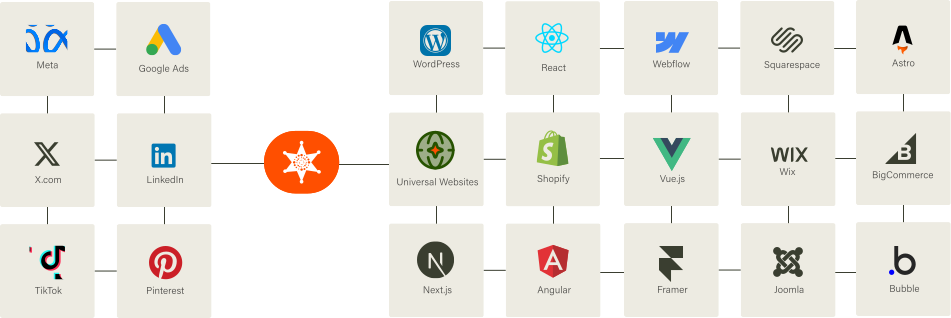
DataCops Integration Ecosystem showing connections to Meta, Google Ads, LinkedIn, TikTok and various CMS platforms like WordPress, Shopify, and React

FAQ

Attribution tools model relationships between events. But if 40% of your events are missing or polluted (ad blockers, bot traffic, cookie clears), the model is modeling noise. DataCops fixes the capture layer first, so downstream attribution math is based on complete, verified data - not reconstructed guesses.


Footer

Don't trust your analytics!

Make confident, data-driven decisions withactionable ad spend insights.

Setup in 2 minutes
No credit card